We've had a quiet week this week at the hut. We're both busy at work. Rob's had a slight cold all week which is making him feel a little droopy. The weather has been a bit cool and damp and grey. So we've just hibernated a bit in the evenings, eating warming foods and reading on the window seat. I can't wait for daylight savings to begin this Sunday!
I thought I'd do a native plant post today. Although I don't work as a botanist at the moment, I can't help myself, as we walked (well raced as the dogs were so keen) along the path to Snug Falls last week, I kept checking with Rob I hadn't lost it. Picking out pretty wildflowers, checking I still knew their names (well at least the name I knew them as, damn taxonomists keep changing them!)
Rob's Monday practical was looking at three families of plants Myrtaceae, Ericaceae and Rhamnaceae. So after our little walk we found a few specimens to take into work the next day.
I thought I'd share a few of my favourite pictures from each family (all photos are Rob's of course!)
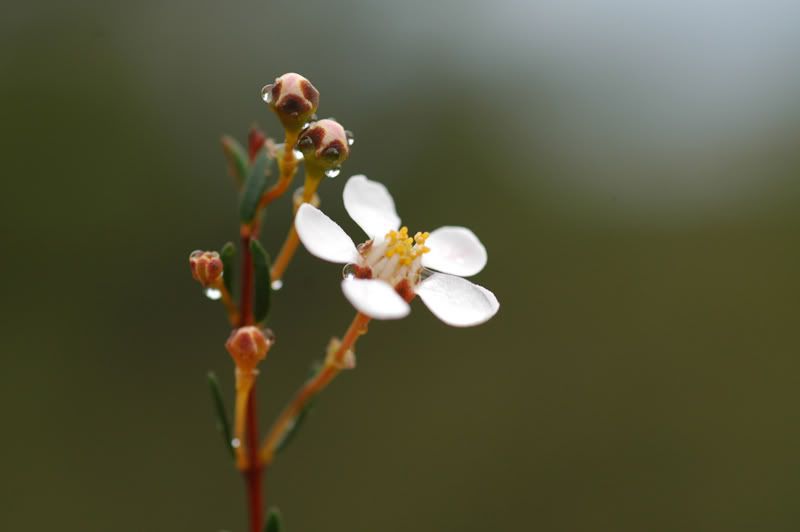
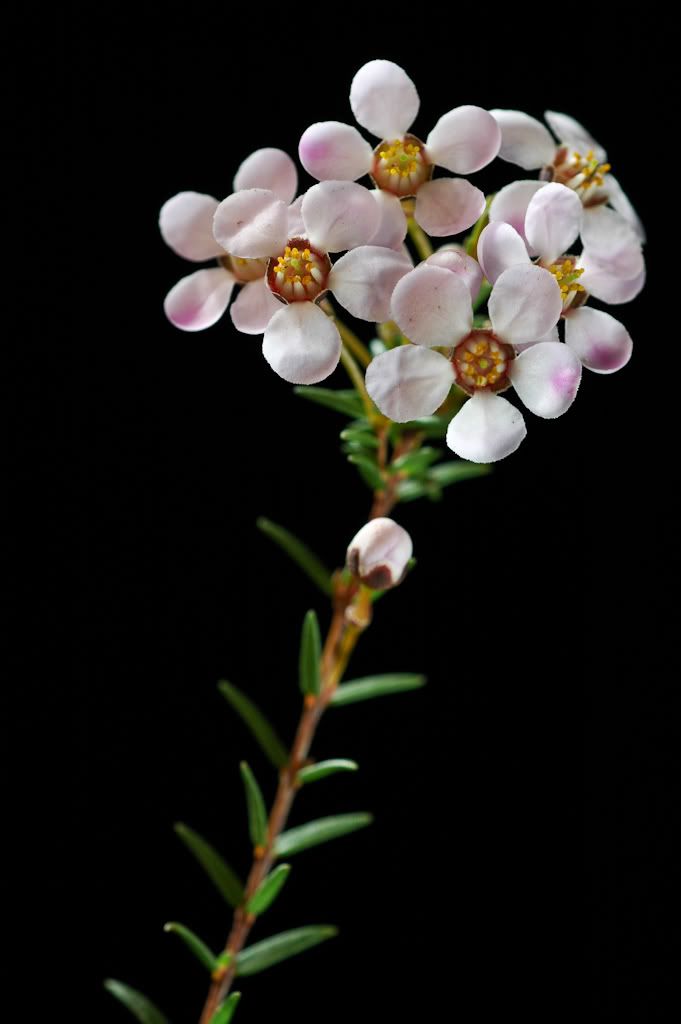
This little cutie is
Euryomyrtus ramossissima, part of the Myrtaceae family, which is better known for the more showy eucalypts, melaleucas and callistemons. The leaves of this family all have that distinctive eucalypt smell if crushed. This particular plant is common in coastal heath vegetation, and is easy to pick out with the five white/pale pink petals.
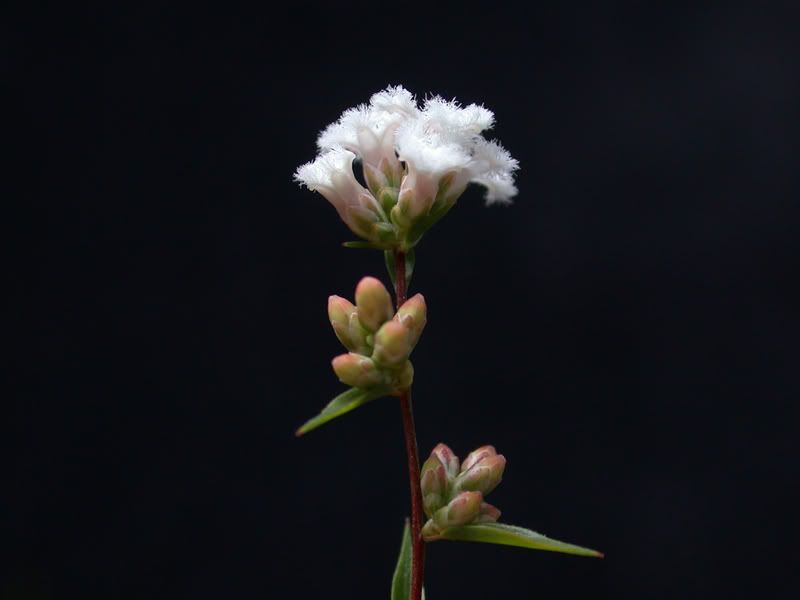
The next two are both members of the Ericaceae family, known for their tough, often sharp little leaves. The one above is
Leucopogon virgatus, I love their fluffy white petals, or more correctly their hairy corolla tube.
Leucopogon is latin for white beard. The petals of all the species in this family are fused into a tube, sometimes they are open like this species, but the tube can also be shut like in
Richea.
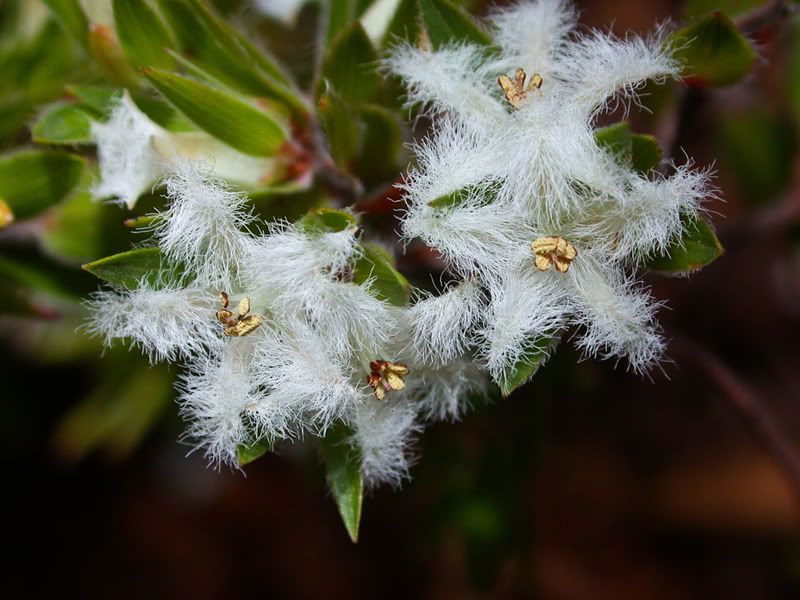
This even furrier flower is actually another species
Pentachondra involucrata found in heathy woodlands.
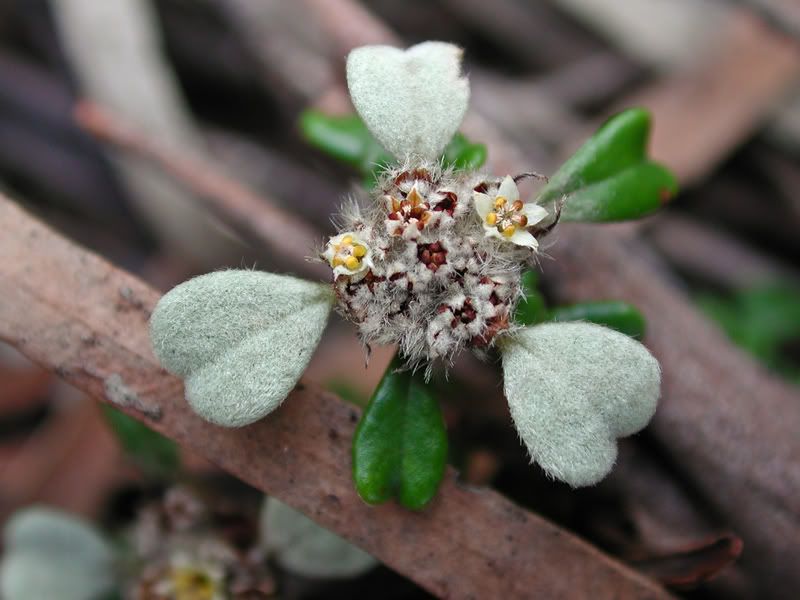
Finally this little plant is part of the Rhamnaceae family, which contains some of my favourite plants. This is the species
Stenanthemum pimeleoides, a rare prostrate shrub found on the east coast. It has tiny little flowers which are quite inconspicuous compared to the larger showy white bracts. Bract is just a term for a modified or specialised leaf associated with a flower (botanists love descriptive terms). Aren't the little heart shaped bracts adorable? I often pick the leaves of plants in this family just to rub their softness against my skin, if they could make lingerie out of them, I'd be the first in line to buy some!
Well there ends today's little botany lesson, hope you have a lovely weekend, so far we don't have any plans and that doesn't worry me a bit!


 This brings me to a few tools I wish I’d had when I was learning. EucaFlip and TreeFlip; Rob’s two publications to help anyone identify Tasmania’s native eucalypts and other trees. Now this may seem biased, but I think they are quite beautiful. You can find out more about them
